Friction is an ever - present force in diesel engines. It occurs whenever two surfaces come into contact and move relative to one another. In the complex environment of a diesel engine, friction can have far - reaching consequences, affecting not only the engine's performance but also its longevity. This is where friction modifiers come into play in diesel engine oil. As a diesel engine oil supplier, we understand the crucial role that friction modifiers play in formulating high - quality engine oils.
The Basics of Friction in Diesel Engines
Before delving into the role of friction modifiers, it's essential to understand the types of friction that occur in diesel engines. There are mainly two types: boundary friction and hydrodynamic friction.
Boundary friction takes place when the lubricating oil film between two moving surfaces is so thin that the surfaces come into direct contact. This often happens during engine startup, shutdown, or under high - load, low - speed conditions. In such situations, the metal - to - metal contact can lead to wear, increased energy consumption, and even component failure.

Hydrodynamic friction, on the other hand, occurs when a thick and continuous oil film separates the moving surfaces. This type of friction is generally lower than boundary friction, but it still contributes to energy losses in the engine. The engine has to expend energy to overcome the resistance of the oil film as the surfaces move.
How Friction Modifiers Work
Friction modifiers are additives that are incorporated into diesel engine oil to reduce friction between moving parts. They work through several mechanisms.
One common mechanism is adsorption. Friction modifiers contain polar molecules that have an affinity for metal surfaces. When added to the engine oil, these molecules attach themselves to the metal surfaces of the engine components, forming a thin, protective film. This film acts as a buffer between the moving parts, reducing direct metal - to - metal contact and thus minimizing boundary friction.
Another mechanism is the formation of a chemical reaction layer. Some friction modifiers react with the metal surfaces under high - temperature and high - pressure conditions. This reaction forms a hard and smooth layer on the metal surface, which can withstand the forces of friction and wear. For example, certain organic friction modifiers can react with iron on the metal surface to form iron carboxylate compounds, which have excellent anti - friction properties.
Benefits of Friction Modifiers in Diesel Engine Oil
Improved Fuel Efficiency
One of the most significant benefits of using friction modifiers in diesel engine oil is improved fuel efficiency. By reducing friction between moving parts, the engine has to work less hard to overcome resistance. This means that less energy is wasted as heat, and more of the fuel's energy is converted into useful work, such as powering the vehicle or driving machinery. Studies have shown that the use of high - quality friction modifiers can lead to a noticeable reduction in fuel consumption, which is not only beneficial for the environment but also for the bottom line of fleet operators and individual vehicle owners.
Reduced Wear and Tear
Friction is a major cause of wear and tear in diesel engines. The constant rubbing of metal surfaces can lead to the formation of scratches, pits, and other forms of damage. Friction modifiers help to protect the engine components by reducing the amount of direct contact between the surfaces. This extends the lifespan of critical engine parts such as pistons, cylinders, and bearings, reducing the need for costly repairs and replacements.
Enhanced Engine Performance
In addition to improving fuel efficiency and reducing wear, friction modifiers can also enhance overall engine performance. A smoother - running engine with less friction can operate more quietly and smoothly. It can also respond more quickly to changes in load and speed, providing better acceleration and throttle response. This is particularly important for heavy - duty diesel engines used in commercial vehicles and industrial applications, where reliable and efficient performance is essential.
Our Diesel Engine Oils with Friction Modifiers
As a diesel engine oil supplier, we offer a range of high - quality engine oils that are formulated with advanced friction modifiers.
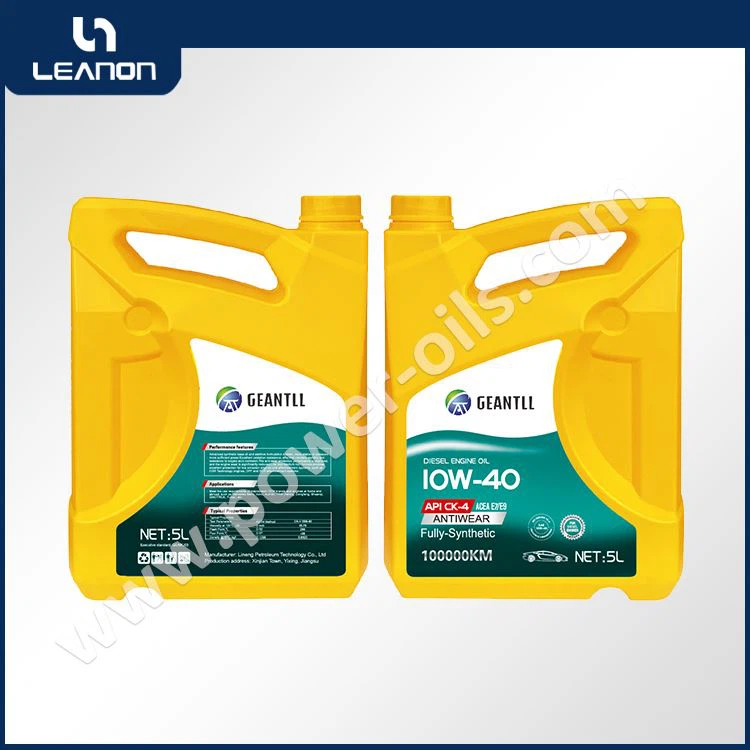
Our Synthetic Diesel Oil CK - 4 is a premium product designed for modern diesel engines. It contains state - of - the - art friction modifiers that provide excellent protection against wear and friction. This oil meets the latest industry standards and is suitable for use in a wide range of applications, including on - road trucks, off - road equipment, and marine engines.
The CI - 4 Diesel Engine Oil is another great option. It is formulated with friction modifiers that are specifically designed to work in older diesel engines. This oil provides reliable protection and performance, helping to keep these engines running smoothly and efficiently.
For those with older - style diesel engines, our CF - 4 15W/40 Diesel Engine Oil is an ideal choice. It contains friction modifiers that can reduce friction and wear in engines that may not be as advanced as modern ones. This oil is known for its excellent detergency and anti - wear properties, ensuring long - term engine protection.
The Future of Friction Modifiers in Diesel Engine Oil
The demand for more efficient and environmentally friendly diesel engines is growing. As a result, the role of friction modifiers in diesel engine oil is likely to become even more important in the future.
Researchers are constantly working on developing new and improved friction modifiers. These new additives are expected to have even better anti - friction and anti - wear properties, while also being more environmentally friendly. For example, there is a trend towards using bio - based friction modifiers that are derived from renewable resources.
In addition, as diesel engines become more advanced and operate under more extreme conditions, friction modifiers will need to be able to withstand higher temperatures, pressures, and loads. This will require the development of more robust and high - performance friction modifier technologies.
Contact Us for Purchase and Consultation
If you are looking for high - quality diesel engine oil with effective friction modifiers, we are here to help. Our team of experts can provide you with detailed information about our products and help you choose the right engine oil for your specific needs. Whether you are a fleet operator, an industrial equipment owner, or an individual vehicle owner, we have the solution for you. Contact us today to start a discussion about your diesel engine oil requirements.
References
- Fox, M. Friction in Internal Combustion Engines. SAE International, 2015.
- Spikes, H. A. The Role of Friction Modifiers in Engine Oils. Tribology International, 2012.
- ASTM International. Standards for Diesel Engine Oils. ASTM, 2020.