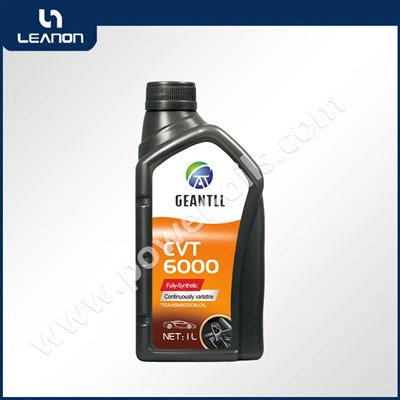
A continuously variable transmission (CVT) represents a significant advancement in automotive technology, offering seamless acceleration and improved fuel efficiency compared to traditional transmissions. At the heart of a CVT's smooth operation lies the gearbox fluid, a crucial component that plays multiple roles in ensuring the system functions optimally. As a trusted gearbox fluid supplier, we understand the intricacies of how this fluid works within a CVT, and we're eager to share this knowledge with you.
The Basics of a Continuously Variable Transmission
Before delving into the role of gearbox fluid, it's essential to understand the fundamental principles of a CVT. Unlike conventional transmissions with a fixed number of gears, a CVT uses a system of pulleys and a belt or chain to provide an infinite number of gear ratios. This allows the engine to operate at its most efficient speed regardless of the vehicle's speed, resulting in better fuel economy and a more comfortable driving experience.


The CVT consists of two variable-diameter pulleys connected by a belt or chain. One pulley is connected to the engine (the drive pulley), and the other is connected to the wheels (the driven pulley). By changing the diameter of the pulleys, the gear ratio between the engine and the wheels can be adjusted continuously. When the drive pulley's diameter decreases and the driven pulley's diameter increases, the vehicle can achieve higher speeds with lower engine RPMs. Conversely, when the drive pulley's diameter increases and the driven pulley's diameter decreases, the vehicle can gain more torque for acceleration or climbing hills.
The Role of Gearbox Fluid in a CVT
Gearbox fluid in a CVT serves several critical functions that are essential for the transmission's proper operation.
Lubrication
One of the primary functions of gearbox fluid is to lubricate the moving parts within the CVT. The pulleys, belt or chain, and other internal components experience significant friction and wear during operation. The fluid forms a thin film between these parts, reducing friction and preventing metal-to-metal contact. This not only extends the lifespan of the components but also ensures smooth and efficient power transfer. Without proper lubrication, the CVT would overheat, and the components would wear out rapidly, leading to costly repairs or even transmission failure.
Cooling
CVTs generate a considerable amount of heat during operation, especially under heavy loads or when the vehicle is accelerating. The gearbox fluid acts as a coolant, absorbing the heat from the internal components and transferring it to the transmission cooler. The cooler then dissipates the heat into the surrounding air, maintaining the fluid and the transmission at an optimal operating temperature. If the fluid cannot effectively cool the CVT, the high temperatures can cause the fluid to break down, leading to a loss of lubrication and increased wear on the components.
Hydraulic Pressure
The gearbox fluid also plays a crucial role in creating hydraulic pressure within the CVT. Hydraulic pressure is used to control the movement of the pulleys and adjust the gear ratio. The transmission control unit (TCU) sends signals to the hydraulic system, which uses the fluid to apply pressure to the pulley actuators. By increasing or decreasing the pressure on the pulleys, the TCU can change the diameter of the pulleys and adjust the gear ratio according to the driving conditions. Without proper hydraulic pressure, the CVT would not be able to shift smoothly or maintain the correct gear ratio.
Sealing
The gearbox fluid helps to seal the internal components of the CVT, preventing leaks and maintaining the integrity of the hydraulic system. The fluid forms a seal between the various gaskets, O-rings, and seals within the transmission, ensuring that the hydraulic pressure is maintained and that the fluid does not leak out. If the seals fail or the fluid leaks, the CVT's performance will be affected, and it may eventually lead to transmission failure.
Types of Gearbox Fluid for CVTs
There are different types of gearbox fluids available for CVTs, each formulated to meet the specific requirements of different CVT designs. As a gearbox fluid supplier, we offer a range of high-quality fluids, including ATF 5 Gearbox Fluid, ATF 9 Gearbox Fluid, and CVT Gearbox Fluid.
ATF 5 Gearbox Fluid
ATF 5 Gearbox Fluid is a high-performance automatic transmission fluid that is suitable for some CVTs. It offers excellent lubrication, cooling, and hydraulic properties, ensuring smooth and efficient operation of the transmission. This fluid is formulated with advanced additives that provide enhanced wear protection, oxidation resistance, and anti-foaming properties.
ATF 9 Gearbox Fluid
ATF 9 Gearbox Fluid is another premium-quality fluid designed for modern CVTs. It has improved frictional properties, which allow for better control of the belt or chain and smoother gear ratio changes. This fluid also provides superior thermal stability, ensuring that it can withstand high temperatures without breaking down.
CVT Gearbox Fluid
Our CVT Gearbox Fluid is specifically formulated for CVTs and meets the strict requirements of many vehicle manufacturers. It offers excellent lubrication, cooling, and hydraulic performance, as well as enhanced anti-wear and anti-oxidation properties. This fluid is designed to provide long-lasting protection for the CVT's internal components and ensure smooth and reliable operation.
Maintaining the Gearbox Fluid in a CVT
Proper maintenance of the gearbox fluid is essential for the longevity and performance of a CVT. Here are some tips to keep in mind:
Regular Fluid Changes
Most vehicle manufacturers recommend changing the gearbox fluid in a CVT at regular intervals, typically every 30,000 to 60,000 miles. Over time, the fluid can break down due to heat, oxidation, and contamination, losing its effectiveness. Regular fluid changes help to remove the old, degraded fluid and replace it with fresh, clean fluid, ensuring that the CVT continues to operate smoothly.
Fluid Level Checks
It's also important to check the gearbox fluid level regularly. Low fluid levels can cause the CVT to overheat and lead to transmission damage. Most vehicles have a dipstick or a fluid level indicator that can be used to check the fluid level. If the fluid level is low, it should be topped up with the recommended fluid.
Using the Right Fluid
Always use the gearbox fluid recommended by the vehicle manufacturer. Different CVTs require different types of fluids, and using the wrong fluid can cause damage to the transmission. As a gearbox fluid supplier, we can help you determine the right fluid for your vehicle based on its make, model, and year.
Conclusion
In conclusion, gearbox fluid plays a vital role in the operation of a continuously variable transmission. It provides lubrication, cooling, hydraulic pressure, and sealing, ensuring that the CVT functions smoothly and efficiently. As a trusted gearbox fluid supplier, we offer a range of high-quality fluids that are specifically formulated for CVTs. Whether you need ATF 5 Gearbox Fluid, ATF 9 Gearbox Fluid, or CVT Gearbox Fluid, we have the right product to meet your needs.
If you're interested in learning more about our gearbox fluids or would like to discuss your specific requirements, we invite you to contact us for a procurement consultation. Our team of experts is ready to assist you in finding the best solution for your CVT.
References
- Automotive Transmission Handbook, Edited by Harald Naunheimer, Bernd Bertsche, Johannes Ryborz
- Modern Automotive Technology, by James D. Halderman